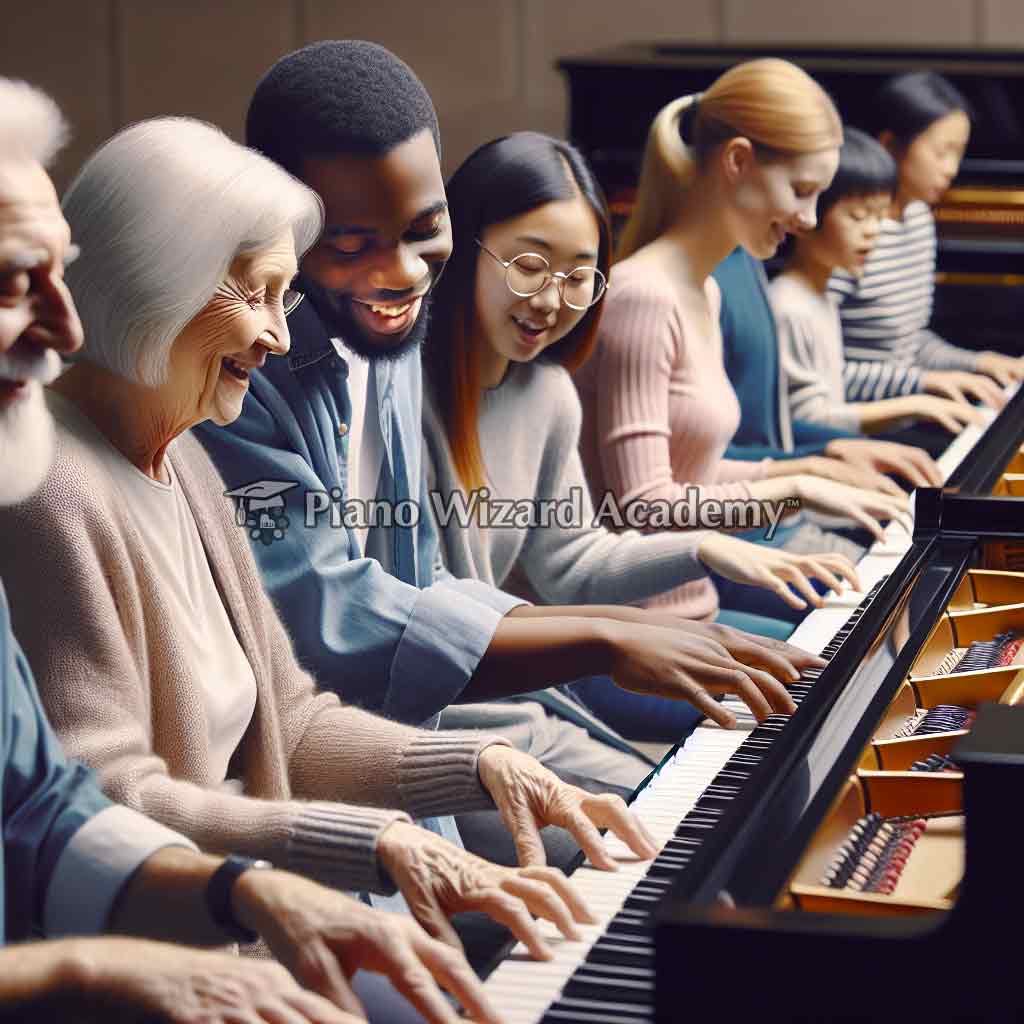
Have you ever listened to a beautiful piano piece and thought, "I wish I could do that"? The good news is, you can! At Piano Wizard Academy, we believe music is everyone's birthright, and learning piano should be easy and joyful for all ages. In this blog post, we will debunk common myths about learning piano and show why "piano for all" is a reality.
Myth #1: You Need to Start Young to Learn Piano
Ah, the classic "It's too late for me" mantra. As parents, we've all encountered those wistful moments when we think about the things we didn't learn as kids. But fret not! The idea that you need to start young to learn piano is as outdated as floppy disks. In fact, contrary to popular belief, adults can not only learn piano but often excel at it.
Adults Have Advantages Too
- Life Experience: Adults bring a wealth of life experience and emotional depth that can add a unique flavor to their playing style.
- Focus and Determination: When adults decide to embark on a piano journey, they often have a clear motivation and goal which leads to sustained effort and dedication.
- Cognitive Skills: Adults tend to have superior cognitive skills for understanding music theory and complex techniques compared to children.
While children might have more free time (and yes, possibly more flexible fingers), adults possess the patience and discipline often required for mastery in arts. In fact, many adult learners find joy in taking online piano courses, exploring different genres from jazz piano lessons to classical piano instruction, and experimenting with interactive piano learning apps that make practice both fun and engaging.
The Science Backs It Up!
A study published by the American Psychological Association highlights how adults can effectively learn new skills such as playing musical instruments, thanks to neuroplasticity—the brain's ability to form new neural connections throughout life. So whether you're interested in honing your advanced piano skills development or simply want to play your favorite popular songs on the piano tutorials, remember that age is just a number! (Source: American Psychological Association)
Real-Life Success Stories
Need some inspiration? Consider Clint Eastwood who learned to play jazz piano in his later years or Paul McCartney who continues to experiment with new musical techniques despite being well past the "ideal" age of learning an instrument. These stories remind us that passion doesn't come with an expiration date!
If you're interested in diving into this world of musical exploration—regardless of your age—check out our comprehensive guide on music theory for pianists. Your journey awaits!
Myth #2: Learning Piano Requires Natural Talent
If you've ever been told that playing the piano is only for the "naturally gifted," it's time to debunk this myth once and for all. Learning to play the piano isn't about being born with an innate talent; it's about cultivating a passion and willingness to learn. In fact, research suggests that hard work and dedication are the true keys to mastering any skill, including playing this beautiful instrument.
According to psychologist Anders Ericsson, it takes approximately 10,000 hours of deliberate practice to achieve mastery in most fields, not just music. So, if your little fingers are itching to tickle those ivories, remember: it’s less about natural talent and more about persistence and practice.
You Can't Play Without Practice
- Start with short daily sessions. Even just 20 minutes a day can produce stunning results over time.
- Utilize resources like our beginner piano tutorials to build a solid foundation.
- Incorporate fun exercises that improve finger dexterity on the piano and challenge yourself with rhythm exercises for pianists.
The Piano Wizard Academy's approach embraces this philosophy by providing tailored lessons like our popular songs on the piano tutorials that make learning engaging and accessible for everyone—from kids trying their first notes to adults diving into adult piano lessons. With interactive piano learning tools and step-by-step piano guidance at your fingertips, anyone can learn how to play without needing "natural talent."
The Brain's Plasticity – Your Best Friend!
The concept of brain plasticity plays a pivotal role in learning new skills at any age. According to a study published in Nature Reviews Neuroscience (Merzenich et al., 1999), our brains are incredibly adaptable and can be rewired through practice and experience. This means your child—or even you—can successfully learn piano at any stage of life!
The trick lies in nurturing curiosity and creativity through engaging platforms like a virtual piano teacher or self-paced piano course options that cater specifically to individual learning paces.
Your brain is like a muscle; the more you use it, especially in creative ways like playing music, the stronger it becomes!
Myth #3: Classical Music is the Only Option
When most people think of piano lessons, visions of Mozart and Beethoven concertos might dance through their heads. While these classical compositions have earned their place in history, they aren't the be-all and end-all of piano music. The truth is, the world of piano stretches far beyond the grand halls of classical music. It's a versatile instrument that can play anything from heartwarming jazz to toe-tapping pop tunes.
Exploring Diverse Genres
- Jazz: Want to add a bit of swing to your playing? Jazz piano lessons might be your groove! With its rich harmonies and improvisational flair, jazz offers an exciting way to express creativity on the keys.
- Pop: Ever wanted to play your favorite chart-toppers? Many students find joy in learning popular songs on the piano. Check out our step-by-step guide on how to play "What Do You Mean?" by Justin Bieber.
- Blues: With its soulful melodies and emotive chord progressions, blues piano can be both cathartic and empowering. Think you've got the blues? Dive into some blues rhythm exercises!
- Film & Theater Music: Who doesn’t love playing those iconic movie themes? From Disney classics to Broadway hits, these pieces are as fun as they are recognizable.
Piano for All Ages and Stages
The beauty of learning piano today is that it's accessible for everyone—yes, even you who's been dodging musical instruments since middle school recitals! Online courses provide beginner-friendly keyboard techniques that allow learners of all ages to engage with diverse genres at their own pace.
If you're looking for a more interactive experience, consider an interactive piano learning app. Such platforms often blend different teaching methods, making it easy for students to switch from classical sonnets to modern hits without missing a beat.
The Takeaway: Embrace Variety!
The notion that classical music is the only path is like saying chocolate chip cookies are the only dessert option—delicious but not exhaustive! Whether you're drawn to soulful ballads or energetic pop anthems, there's a whole spectrum of music waiting for you at your fingertips.
So why not broaden your musical horizons with our comprehensive piano guide? Remember, when it comes to playing piano, there’s no wrong genre—there’s only what makes your musical heart sing. 🎹✨
Myth #4: Online Learning Isn’t Effective
Ah, the old chestnut that online learning isn't effective. If we had a dime for every time we heard that, well, we'd be able to buy a concert piano by now! Let's demystify this myth and explore how online platforms have revolutionized piano learning.
The Rise of Online Piano Courses
Online platforms have emerged as game-changers in the field of music education. With the advent of technology, learning the piano is no longer confined to traditional classroom settings. Today, a vast array of online piano courses cater to enthusiasts of all ages and skill levels. These digital avenues offer flexibility, interactive content, and a personalized learning experience.
- Flexibility: Tailor your lessons to fit your hectic schedule. Whether you're an early bird or a night owl, your virtual piano teacher is always ready when you are.
- Variety: From beginner-friendly keyboard techniques to advanced jazz piano lessons, there's something for everyone.
- Diverse Teaching Methods: Enjoy step-by-step piano guidance with engaging tutorials like learning how to play "Angel" by Sarah McLachlan on Piano Wizard.
The Effectiveness Factor
A study conducted by Northwestern University found that children who took music lessons displayed enhanced cognitive skills compared to those who did not (source: Frontiers in Psychology). Additionally, an article in Forbes highlights that online learning can be just as effective as traditional methods if designed with engagement and interaction in mind (source: Forbes).
Piano for all is not just a catchphrase—it's a reality thanks to these comprehensive digital courses. With features such as interactive feedback and self-paced progress tracking, students can set their own pace and revisit challenging concepts until they master them.
A Real-Life Example
Imagine you're trying out new chord progression tutorials for piano late at night without worrying about waking up the neighbors or needing to commute somewhere. The beauty of virtual lessons is that they're accessible anytime, anywhere!
The next time someone tells you that online learning can’t compete with traditional teaching methods, smile knowingly and maybe even show them how you nailed "What Do You Mean?" by Justin Bieber using our handy step-by-step guide!
Getting Started with Piano Wizard Academy
Diving into the world of music with a piano for all philosophy, Piano Wizard Academy makes learning an instrument a delightful journey for both kids and parents. Whether your child is aspiring to be the next Beethoven or simply wants to plunk out "Twinkle, Twinkle, Little Star," our academy is crafted to make starting this musical adventure simple and enjoyable.
Step-by-Step Guidance
Learning piano doesn't have to be daunting. At Piano Wizard Academy, we understand that every pianist begins as a beginner. Our programs offer step-by-step piano guidance tailored for learners at all levels. Our easy-to-follow tutorials break down complex concepts into digestible parts, ensuring no one gets left behind on their musical journey.
Interactive and Engaging Lessons
- Piano Learning App: Explore our interactive piano app designed to make practice sessions engaging and effective.
- Beginner Piano Tutorials: Start with beginner-friendly keyboard techniques that build a solid foundation for more advanced skills.
- Virtual Piano Teacher: Experience the benefits of having a virtual guide walk you through each lesson in real-time.
The brilliance of our academy's approach lies in its ability to transform apprehension into excitement. Many parents report that their children eagerly anticipate lessons because they feel more like play than instruction.
Piano Lessons Tailored for Everyone
No matter if your child is interested in jazz piano lessons or classical piano instruction, our comprehensive piano guide covers all genres. For those who prefer to learn by ear, we offer specialized tutorials like how to play popular songs on the piano, making it possible for everyone to explore music styles that resonate with them personally.
A Fun Family Activity
Piano Wizard Academy doesn't just teach music—it brings families together through shared experiences. Picture this: a Friday night where instead of screen time, your family gathers around the digital piano for an impromptu concert. Not only does this foster creativity in children, but it also strengthens family bonds—a win-win!
If you're ready to embark on this melodious journey with us, get started today. The keys to musical exploration are waiting—let's unlock them together!
In conclusion, the myths surrounding learning the piano are just that—myths! Whether you're looking into an online course or eager to start with interactive apps, remember that "piano for all" isn't just a dream—it's an achievable reality. Join us at Piano Wizard Academy today and embrace the joy of music at any age!