
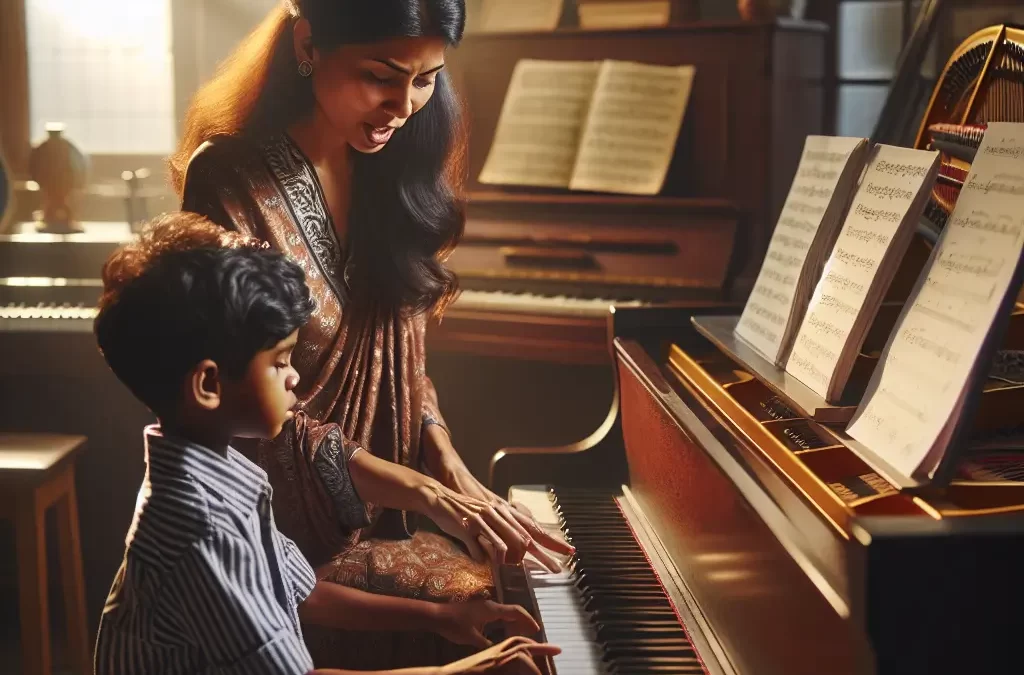
Why Piano Can Be Beneficial for Children with Autism
Autism and piano is a topic many parents explore when looking for activities that build confidence, focus, and creativity. If you're the parent of a child with autism...
If you're the parent of a child with autism, you may be wondering whether learning the piano could make a difference. While every child is unique, many parents and educators have found that piano lessons can provide benefits that extend beyond music. From improving focus and coordination to building confidence and creating opportunities for self-expression, learning the piano can be a rewarding experience for many children on the autism spectrum.
Research suggests that music education may support attention, motor coordination, communication, and emotional development in many children. While piano lessons are not a treatment for autism, they can provide a structured, enjoyable activity that encourages focus, routine, creativity, and personal achievement. Many parents also find that music becomes a meaningful way to connect with their child through shared experiences.
How Piano Supports Learning and Development
Parents often ask whether learning the piano can help a child with autism beyond simply learning to play music. While every child is unique and no activity works the same way for everyone, piano lessons combine several skills that can support a child's overall development engagingly and enjoyably.
Unlike many activities, playing the piano encourages children to use both their minds and their bodies at the same time. Reading visual information, listening carefully, coordinating both hands, and developing rhythm all work together during every lesson.
Some of the potential benefits include:
✅ Improved Attention and Focus
Many piano activities encourage children to concentrate on one task at a time while gradually increasing the amount of time they can remain engaged. Because learning happens one small step at a time, many children experience regular success, helping them stay motivated.
✅ Fine Motor Skills and Coordination
Playing the piano strengthens finger independence, hand coordination, and controlled movement. Pressing individual keys with accuracy helps develop fine motor control while encouraging both hands to work together.
✅ Pattern Recognition
Music is built on patterns. Notes, rhythms, chords, and melodies repeat in predictable ways, and many children on the autism spectrum naturally enjoy recognizing and working with patterns. This structured environment often makes learning both enjoyable and rewarding.
✅ Listening and Memory
As children begin recognizing melodies and rhythms, they also strengthen listening skills and auditory memory. Learning short musical phrases and repeating them helps develop memory in a fun and practical way.
✅ Confidence Through Achievement
Perhaps one of the greatest benefits of learning the piano is the sense of accomplishment it provides. Every new song learned, every new skill mastered, and every small milestone gives children an opportunity to experience success, building confidence that often carries into other areas of life.
Research Spotlight
Studies suggest that music training may support attention, motor coordination, working memory, and executive functioning in many children. While results vary from child to child, structured music education provides opportunities to practice these skills in an enjoyable and motivating environment.
While piano lessons are different from clinical music therapy, both recognize the value of music as a way to support learning, communication, and emotional development. If you'd like to learn more about the current research on music therapy and autism spectrum disorder, the American Music Therapy Association's Autism Spectrum Disorder resources provide an excellent overview of the evidence and professional guidance.
Why Many Children with Autism Enjoy Piano
 Every child on the autism spectrum has unique strengths, interests, and challenges. While piano lessons aren't the right fit for every child, many families discover that music offers something special because it combines structure, creativity, and personal expression in a way few other activities can.
Unlike team sports or group activities that may feel overwhelming, piano is often learned one student at a time. Lessons can be adapted to a child's pace, interests, and learning style, allowing progress without unnecessary pressure.
Many children with autism are drawn to the piano because it offers:
✅ A Predictable Learning Environment
Piano lessons follow consistent patterns. Keys never change position, rhythms repeat, and songs are learned one step at a time. For children who thrive on routine and predictability, this structured approach can make learning feel safe and enjoyable.
✅ Clear Visual Organization
The piano keyboard is organized in repeating patterns that are easy to recognize. Many children naturally begin identifying groups of black and white keys, helping them navigate the keyboard with growing confidence.
✅ Immediate Positive Feedback
Every key produces an instant sound. Children immediately hear the results of their actions, making it easier to understand cause and effect while reinforcing successful learning experiences.
✅ An Opportunity for Self-Expression
Some children find it easier to communicate through music than through words. Whether playing a favorite melody or simply experimenting with sounds, the piano provides another way to express emotions, creativity, and personality.
✅ A Sense of Independence
One of the most rewarding moments for parents is watching their child sit down at the piano and play a song independently. Those small victories often become powerful confidence builders that extend beyond music lessons into everyday life.
Music and autism is a perfect match.
Parent Perspective
Every child progresses differently. Some may enjoy short five-minute practice sessions, while others happily spend much longer at the keyboard. The goal isn't to compare your child with anyone else. It's to celebrate steady progress and make learning an enjoyable part of everyday life.
Choosing the Right Piano Lessons for a Child with Autism
Every child learns differently, which means there is no single teaching method that works for everyone. The best piano lessons are those that adapt to the child's strengths, interests, attention span, and learning style rather than expecting every student to progress in exactly the same way.
For many children on the autism spectrum, patience and flexibility are just as important as musical instruction. Lessons that celebrate small successes, encourage exploration, and build confidence often produce better long-term results than those that focus solely on technical perfection.
When looking for piano lessons, consider these qualities:
✅ Individualized Instruction
Every child develops at a different pace. A good instructor recognizes that progress isn't measured by how quickly a student finishes a lesson book, but by how confidently they understand and enjoy each new concept.
✅ Short, Positive Learning Sessions
Many children learn best through shorter, focused practice sessions rather than long rehearsals. Even ten or fifteen minutes of enjoyable practice each day can produce remarkable progress over time.
✅ A Structured but Flexible Approach
Children often benefit from routine, but they also need the freedom to learn at their own pace. The best lessons provide clear structure while allowing flexibility when a child needs additional time or a different explanation.
✅ Learning Through Success
Confidence grows when children experience success early and often. Rather than overwhelming beginners with difficult exercises, many effective teaching methods introduce new skills gradually, allowing students to enjoy making music from their very first lessons.
✅Family Encouragement
Parents don't need to be musicians to support their child's musical journey. Celebrating small achievements, listening to new songs, and making practice a positive family experience can be just as valuable as the lesson itself.
Piano Wizard Insight
At Piano Wizard Academy, we've worked with many families over the years who wanted a learning experience that felt encouraging rather than frustrating. Our philosophy has always been simple: build confidence first. When children experience the joy of making music early, they are often more motivated to continue learning the skills that follow.
Success Stories from Real Families
For more than 30 years, Piano Wizard Academy has had the privilege of working with families whose children learn in many different ways. While every child's journey is unique, one thing we've seen repeatedly is the confidence that can grow when learning music becomes enjoyable instead of stressful.
From Martha: "This means the world to us too!!! This is from a non verbal autistic boy, I never would have known if not for PW. Thank you! Minh is in a special- need music band with six other members like him. Tomorrow will be their first gig ! 😉 A wonderful non-profit organization call Friendship Circle. Minh is the latest band member to join but he learned the songs so fast!!! His music teacher, a music professor at UM, is amazed!!"
From Michelle: "I wanted to let you know that so far, my son loves it. . . . The graphics are entertaining and keep him interested. . . Working with children with Autism, they sometimes need to be prompted more than one time to start a task. My son did not need prompting when he was introduced to this game. At 6 years old, he is a pretty advanced gamer, being able to pick up how to play any game immediately. He enjoys learning games, but usually only if they have a favorite movie character attached. I feel the music is what kept him interested, as well as feeling as if he was playing a game."
Every child is different, and no two musical journeys are the same. Our goal has always been to help students discover the joy of making music while building confidence one step at a time.
Frequently Asked Questions About Autism and Piano
✅ Can children with autism learn to play the piano?
Absolutely. Many children on the autism spectrum successfully learn to play the piano, although every child's journey is different. Some students progress quickly, while others benefit from additional time, repetition, and individualized instruction. The goal isn't to compare children with one another, but to help each child develop at a pace that builds confidence and enjoyment.
✅ At what age should my child begin piano lessons?
There isn't a single "perfect" age to begin. Some children are ready at four or five years old, while others may benefit from waiting until they can comfortably focus for short periods and follow simple instructions. Readiness is usually more important than age.
✅ Does my child need to read sheet music immediately?
No. While learning to read music is an important long-term goal, many children benefit from first developing rhythm, listening skills, keyboard familiarity, and confidence. Introducing too many concepts at once can sometimes create unnecessary frustration. Building musical success first often makes learning notation much easier later.
✅ How long should practice sessions last?
For many beginners, especially younger children, ten to fifteen minutes of focused practice each day is often more productive than a single long practice session. As confidence and interest grow, practice time naturally increases.
✅ Should we buy an expensive piano?
Not necessarily. A quality digital piano with full-sized, touch-sensitive keys is an excellent choice for many families. The most important factor isn't owning the most expensive instrument. It's having one that's available and enjoyable to play regularly.
✅ Can music cure autism?
No. Autism is a lifelong neurodevelopmental condition, and piano lessons should never be viewed as a cure or medical treatment. However, many families find that learning music supports communication, confidence, creativity, emotional expression, and overall quality of life. Every child is unique, and experiences will naturally vary.
Final Thoughts
Every child deserves the opportunity to discover their own strengths.
For many children on the autism spectrum, the piano becomes much more than a musical instrument. It becomes a source of confidence, creativity, routine, and personal achievement. Whether your child dreams of performing on stage or simply enjoys playing favorite songs at home, learning the piano can become a rewarding part of their journey.
Progress may come one note at a time, but every small success is worth celebrating.
If you're considering piano lessons for your child, focus less on perfection and more on creating positive musical experiences that encourage curiosity, confidence, and joy.
Ready to Explore the Piano Wizard Method?
For more than 30 years, Piano Wizard has helped students ages 3 to 99 discover a fun, encouraging way to learn piano. Our step-by-step approach emphasizes early success, builds confidence, and allows students to experience the joy of making music from their very first lessons.
Whether your child is just beginning or learns differently from traditional students, Piano Wizard Academy provides resources designed to help every learner progress at their own pace.
👉 Explore the Piano Wizard Method