

Piano games can turn ordinary practice into something children actually want to do.
Instead of starting every session with drills, worksheets, or repeated reminders to practice, a good piano game gives children a goal, immediate feedback, and a reason to keep going. They are still working on notes, rhythm, coordination, listening, and keyboard skills, but the learning happens through play.
That does not mean every game teaches piano equally well. Some are little more than entertainment. Others are designed to help beginners connect what they see and hear with what they actually play on a real keyboard.
For parents looking for a more engaging way to introduce music, understanding the different types of piano games can help you choose activities that are both fun and useful.
What Is a Piano Game?
A piano game uses challenges, visual cues, scores, repetition, or other game-style elements to help someone practice musical skills.
Depending on the game, children might:
- Identify notes on a keyboard
- Match notes to colors or symbols
- Copy rhythms
- Follow melodies
- Practice finger numbers
- Recognize patterns
- Play songs on a real piano or MIDI keyboard
The best games do more than keep children occupied. They connect the activity to skills that eventually transfer to real piano playing.
Why Piano Games Can Make Practice More Engaging
Traditional practice often asks beginners to repeat something until they improve. That repetition is useful, but young learners may lose interest if they cannot see why they are doing it.
A game adds a more immediate purpose.
Instead of simply being told to play a pattern ten times, a child might try to complete a level, improve a score, finish a song, or correctly match a series of notes.
That creates a simple feedback loop:
- Try something
- See or hear the result
- Adjust
- Try again
When the challenge is appropriate for the learner, repetition can feel less like an assignment and more like progress.
Different Types of Piano Games
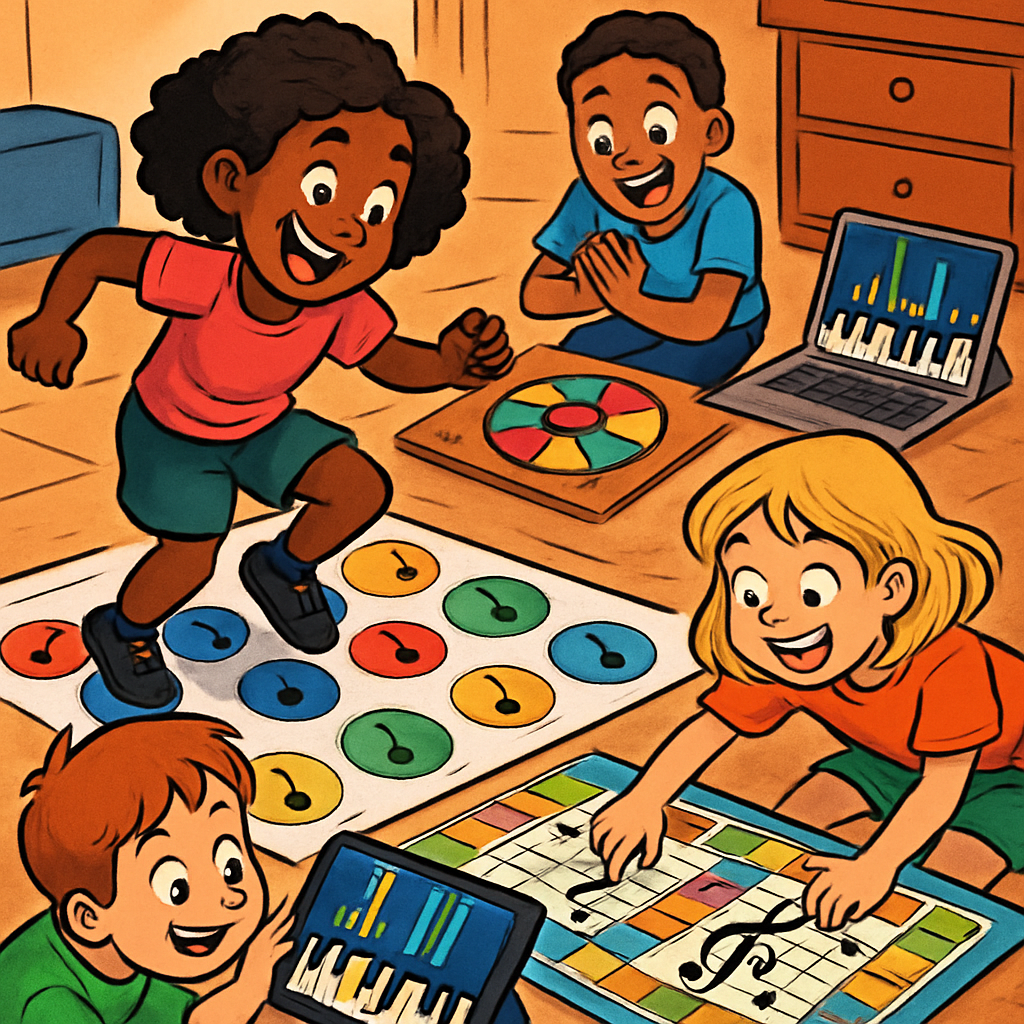
There is no single kind of piano game. Some are played entirely on a screen, some use a real keyboard, and others require no technology at all.
Note Recognition Games
These games help beginners identify notes and learn where they appear on the keyboard.
A simple version can be played at home. Call out a note and ask your child to find it on the piano. Once that becomes easy, reverse the game by pointing to a key and asking for its name.
Digital versions may add scores, timers, levels, or visual rewards.
Rhythm Games
Rhythm games help children hear and repeat patterns.
You can begin without a piano. Clap a short rhythm and ask your child to copy it. Then let your child create a rhythm for you.
At the keyboard, the same game can be played using a single note.
Keyboard Pattern Games
The piano keyboard is built around repeating groups of two and three black keys.
Games that ask children to find these groups, locate all the C notes, or recognize repeated patterns can make the keyboard easier to understand.
Song-Based Piano Games
These are often the most motivating because the learner gets to play recognizable music.
Rather than practicing isolated notes indefinitely, the game guides the student through a melody or song and provides feedback as they play.
Piano Games That Use a Real Keyboard
This is an important distinction.
A touchscreen game may teach note names or rhythm, but if the goal is learning piano, eventually the student needs to interact with actual keys.
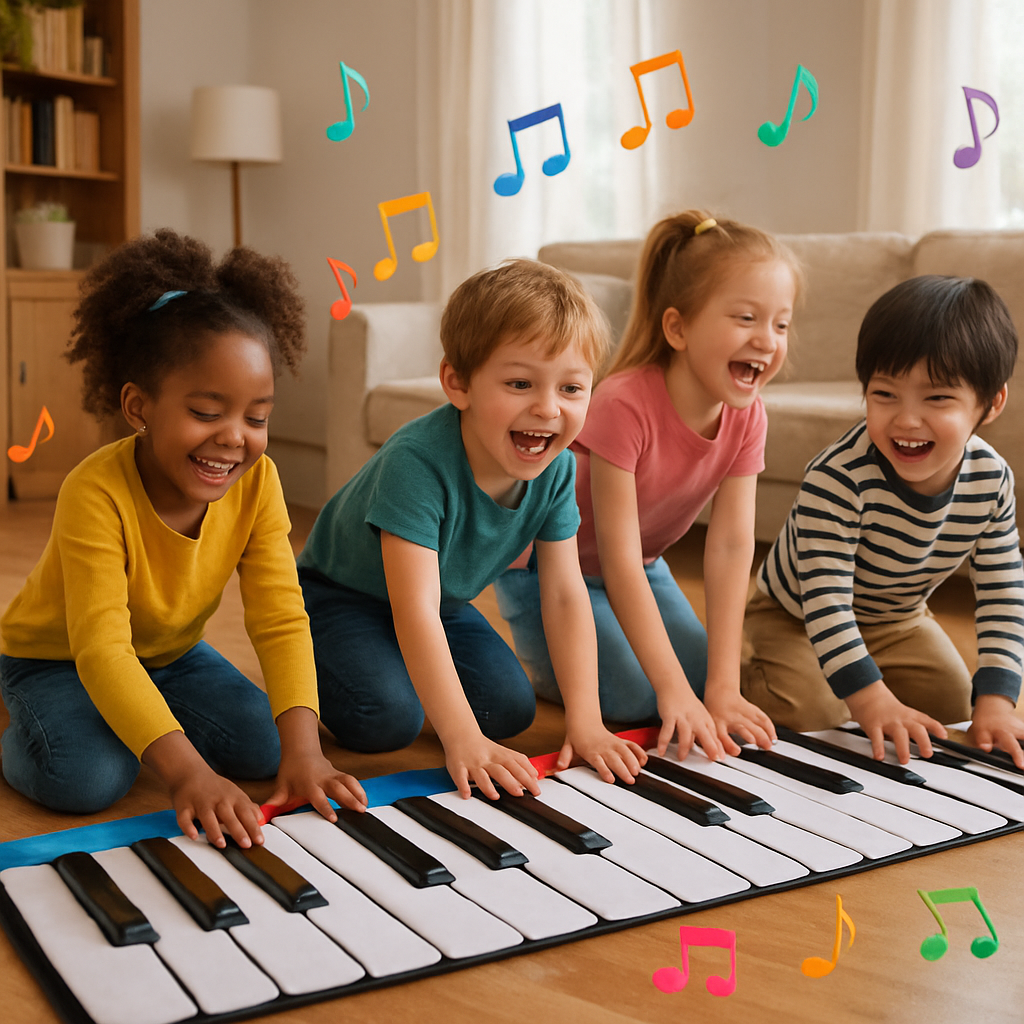
A piano keyboard game connects the game experience directly to a piano or MIDI keyboard so the learner develops physical keyboard skills while playing.
What Should a Good Piano Game Teach?
Fun matters, but the game should also lead somewhere.
Look for activities that reinforce useful musical skills such as:
- Note recognition
- Rhythm and timing
- Finger coordination
- Listening
- Keyboard awareness
- Pattern recognition
- Hand-eye coordination
- Gradual music reading
A child does not need to work on every skill at once. In fact, one advantage of a game-based approach is that a complicated task can be broken into smaller challenges.
Online Piano Games vs. Real Keyboard Games
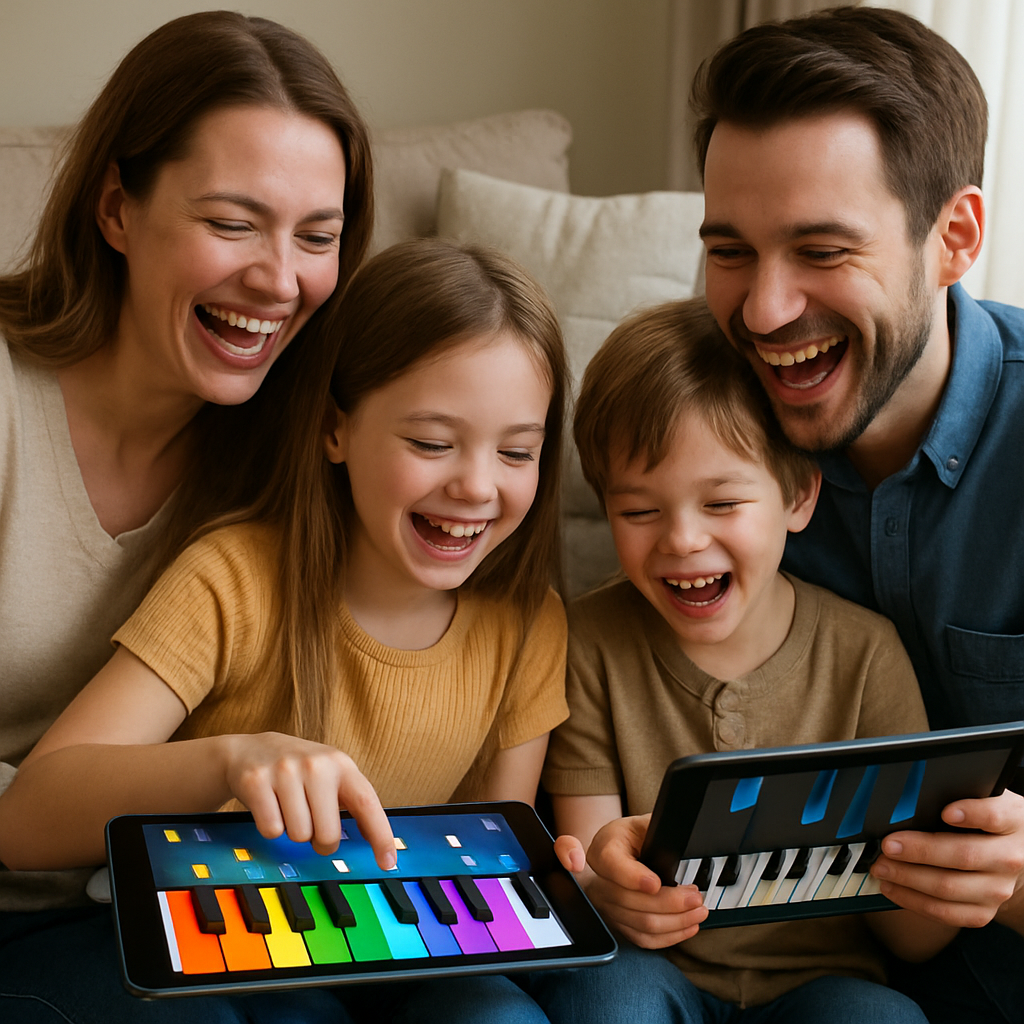
Online piano games can be useful for introducing musical concepts because they are easy to access and often provide immediate feedback.
However, there is a difference between tapping notes on a screen and learning to play an instrument.
A physical piano or keyboard requires the student to:
- Move real keys
- Use individual fingers
- Coordinate both hands
- Navigate the physical layout of the keyboard
- Connect movement with sound
For that reason, parents should consider whether a piano game eventually transfers the learner from the screen to the instrument.
Benefits of Using Piano Games With Children
Piano games can support several areas of early music learning when they are used as part of a broader practice routine.
They Make Repetition Easier
Learning an instrument requires repetition.
A game can give children a reason to repeat the same musical skill without making every repetition feel identical.
They Provide Immediate Feedback
Many digital piano games show the learner immediately whether a note, rhythm, or pattern was correct.
That can help beginners notice mistakes while the action is still fresh.
They Encourage Keyboard Exploration
Children may be more willing to experiment with notes and patterns when they are not worried about making a mistake in a formal lesson.
They Can Build Confidence
Small accomplishments matter.
Completing a song, beating a previous score, or mastering a difficult pattern gives a child visible evidence of improvement.
How to Choose the Right Piano Game for Your Child
Not every child responds to the same learning style, so pay attention to how your child interacts with the game.
Look for a Clear Learning Goal
Ask what the game is actually teaching.
Is the child learning notes, rhythm, keyboard geography, music reading, or coordination?
A game can be entertaining and educational at the same time, but the musical purpose should be clear.
Choose the Right Difficulty
If the game is too easy, children may become bored.
If it is too difficult, they may become frustrated.
Look for a system that introduces new challenges gradually.
Look for Progression
A useful piano game should not keep the learner at the same level forever.
It should build from simpler activities toward more demanding musical skills.
Consider Whether It Uses a Real Keyboard
If your goal is eventually playing piano, this is one of the most important considerations.
Screen activities can teach concepts, but practicing on real keys develops the physical connection between the learner and the instrument.
Watch Whether Your Child Wants to Return
One of the clearest signs that a learning tool is working is simple: does your child want to use it again?
Engagement alone does not guarantee musical progress, but a technically perfect learning system is not very useful if the student refuses to practice.
How to Use Piano Games During Practice
Piano games do not have to replace everything else a student does.
They can be one part of a balanced practice session.
For example:
- 5 minutes: note or rhythm game
- 10 minutes: work on a song
- 5 minutes: repeat a difficult section or try a new challenge
The exact schedule will depend on the child's age and attention span.
For younger students, shorter sessions several times a week may work better than one long practice session.
Create a Music Space That Makes Playing Easy
The environment can make a surprising difference.
If the keyboard has to be pulled from a closet, connected, rearranged, and cleaned off every time a child wants to practice, playing piano becomes a project before the lesson even starts.
If possible, create a small dedicated music space with:
- A piano or digital keyboard ready to play
- A comfortable bench or chair
- A tablet or computer if the game requires one
- Headphones for quiet practice
- Easy access to lesson materials
The easier it is to begin, the more likely practice is to happen.
Free Piano Games Can Be Useful, but Know Their Limits
Free piano games can be a good way to introduce note recognition, rhythm, and other basic musical concepts.
They can also help parents see whether a child responds well to game-based music learning before investing in a larger program.
But free games are often designed around one isolated skill.
If the goal is actually learning piano, look for a structured progression that connects those individual skills and moves the student toward playing songs and reading music.
How Piano Wizard Turns a Piano Game Into a Learning System
Piano Wizard was built around the idea that beginners should experience the reward of making music early.
Students use a real piano or MIDI keyboard while following visual game cues on the screen.
At first, the experience feels much more like playing a game than reading a traditional music lesson.
But the game is only the beginning.
As students progress, the visual cues gradually change toward standard musical notation. The learner begins connecting the game experience with the symbols used in traditional music reading.
Along the way, students work on:
- Keyboard familiarity
- Timing
- Finger coordination
- Note recognition
- Pattern recognition
- Music reading
- Playing complete songs
The purpose is not simply to make piano more entertaining. It is to use the engagement of a piano game as a pathway toward real musical skills.
Piano Games Should Lead Back to Music
The best piano games are not the ones that keep children staring at a screen the longest.
They are the ones that make children want to play.
A useful game helps a learner recognize a note, understand a rhythm, play a pattern, complete a song, or discover something new about the keyboard.
Then the game has done its job.
It has turned practice into curiosity.
For younger learners specifically, see our guide to piano games for kids for simple activities parents can use at home.
You can also make learning piano feel more like play with our <Piano Keyboard Game, designed to help beginners build real piano skills through an interactive, visual approach.