
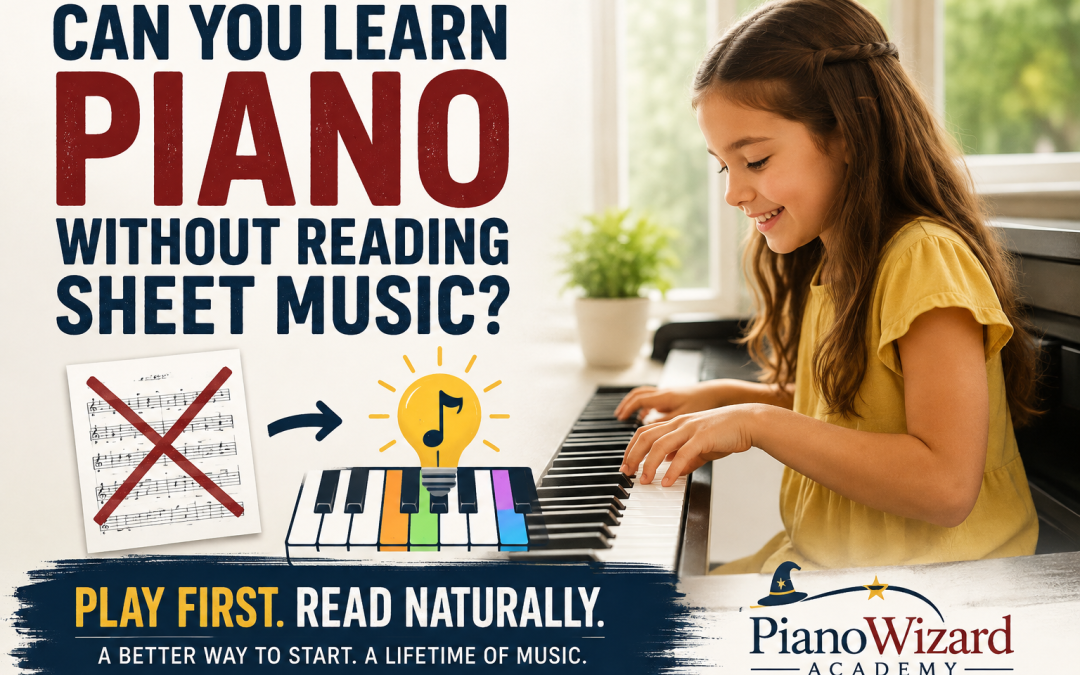
The short answer is yes. The better question is whether you should begin that way.
 You certainly can learn piano without reading sheet music, and for many beginners it's actually a more natural way to begin.
If you've ever wondered whether you must learn to read music before you can play your first song, the answer is no.
"First, you need to learn to read sheet music."
For many beginners, that's exactly where the excitement ends. Before they've played a single recognizable song, they're asked to memorize notes, symbols, rhythms, and music theory. It's no surprise that many new students become frustrated before they ever discover the joy of making music.
But is learning to read sheet music really the only way to begin?
The answer is no.
Many successful musicians first developed the ability to play, listen, and understand music before becoming fluent readers. The real question isn't whether reading music is important. It absolutely is. The question is when it should be introduced.
Music Is a Language
Think about how you learned your native language.
As a child, no one handed you a grammar book before you spoke your first words. You learned by listening, imitating, experimenting, and communicating with the people around you. Reading and writing came later, after you had already developed confidence using the language.
Music works much the same way.
Playing an instrument is another form of communication. Before worrying about written notation, beginners benefit from discovering rhythm, melody, patterns, and the satisfaction of making real music.
Learning to play first doesn't eliminate the need to read music. It simply follows a more natural learning sequence.
Why Traditional Lessons Often Feel Difficult
Traditional piano instruction has helped countless musicians become excellent performers. Many teachers begin with music notation because reading sheet music is an important long-term skill.
However, this approach can also overwhelm beginners.
Imagine trying to learn a new language by memorizing spelling rules before speaking your first sentence.
For many people, that's exactly what beginning piano lessons feel like.
Instead of experiencing the excitement of making music, students spend weeks identifying notes on a page before they ever feel like they're actually playing.
For some learners, that's perfectly fine.
For many others, it's discouraging.
Another Way to Begin
At Piano Wizard Academy, we believe confidence should come first.
Beginners start by making real music immediately. As they gain experience, reading sheet music and understanding music theory become much easier because they already understand how music sounds and feels.
Instead of asking beginners to memorize symbols first, we encourage them to experience the joy of playing from the very beginning.
As confidence grows, reading becomes a natural next step rather than an obstacle.
Does This Mean You'll Never Learn to Read Music?
Not at all.
Reading sheet music remains one of the most valuable skills a musician can develop.
The difference is simply when it's introduced.
By allowing beginners to enjoy making music first, reading becomes meaningful instead of intimidating. Students begin connecting written notes with sounds they already recognize instead of trying to decode an unfamiliar language.
Who Benefits from This Approach?
Young Children
Children naturally learn through play, exploration, and repetition. Beginning with enjoyable musical experiences helps them stay motivated while developing real piano skills.
Teenagers
Teens often want to play songs they recognize as quickly as possible. Building confidence early keeps them engaged and encourages consistent practice.
Adult Beginners
Adults frequently believe they're "too old" or "not talented enough" to learn piano. Starting with music instead of complicated notation removes much of that fear and allows them to experience success much sooner.
Students with Different Learning Styles
Visual learners and students who struggle with traditional teaching methods often benefit from seeing and hearing music before studying written notation in depth.
🎹 Beginner's Checkpoint
Learning to read sheet music is an important goal.
Learning to enjoy making music is an even more important first step.
When beginners experience success early, they're far more likely to continue learning, practicing, and eventually becoming confident music readers.
Ready to Experience a Different Way to Learn?
Yes, you can learn piano without reading sheet music. If you're looking for piano lessons for beginners that make learning enjoyable from the very first lesson, explore how Piano Wizard Academy's visual, step-by-step method helps children, teenagers, and adults build confidence while learning to play real music.